


Abstract
BACKGROUND Notions about the most common errors in medicine currently rest on conjecture and weak epidemiologic evidence. We sought to determine whether cascade analysis is of value in clarifying the epidemiology and causes of errors and whether physician reports are sensitive to the impact of errors on patients.
METHODS Eighteen US family physicians participating in a 6-country international study filed 75 anonymous error reports. The narratives were examined to identify the chain of events and the predominant proximal errors. We tabulated the consequences to patients, both reported by physicians and inferred by investigators.
RESULTS A chain of errors was documented in 77% of incidents. Although 83% of the errors that ultimately occurred were mistakes in treatment or diagnosis, 2 of 3 were set in motion by errors in communication. Fully 80% of the errors that initiated cascades involved informational or personal miscommunication. Examples of informational miscommunication included communication breakdowns among colleagues and with patients (44%), misinformation in the medical record (21%), mishandling of patients’ requests and messages (18%), inaccessible medical records (12%), and inadequate reminder systems (5%). When asked whether the patient was harmed, physicians answered affirmatively in 43% of cases in which their narratives described harms. Psychological and emotional effects accounted for 17% of physician-reported consequences but 69% of investigator-inferred consequences.
CONCLUSIONS Cascade analysis of physicians’ error reports is helpful in understanding the precipitant chain of events, but physicians provide incomplete information about how patients are affected. Miscommunication appears to play an important role in propagating diagnostic and treatment mistakes.
- Medical errors
- medication errors
- safety management
- outcome and process assessment (health care)
- patient safety
- cascade analysis
- root cause analysis
- primary health care
INTRODUCTION
The early years of the patient safety movement focused on the low-hanging fruit—the medical errors that are easiest to recognize and remedy (eg, adverse drug events, surgical mishaps). It is unclear, however, whether these errors are the most common or most harmful to patients.1 Properly measuring the incidence and morbidity of errors requires sound epidemiologic research, and the results and validity of such research depend greatly on how precisely errors are defined and the settings where the research is conducted.
Errors are difficult to measure, not only because of inadequate reporting and varied definitions, but also because most error incidents are not single acts but a chain of events.2 Prescribing the wrong dose of a drug may be counted as a single error and given a single name, such as a prescribing error, but the physician’s prescribing error may have occurred because the medical record contained an incorrect body weight or because a laboratory report was missing. Researchers and administrators who ignore this complexity can produce skewed statistics and propagate imprecise notions about the anatomy, causes, and consequences of errors. This imprecision affects patients, clinicians, and policy makers, because it misplaces blame and resources on secondary culprits3 and diverts attention from fundamental problems and system redesigns that can more effectively enhance patient safety.4, 5
A more thoughtful approach to the analysis of medical errors would make their complex anatomy explicit. Studying the cascade2, 6 of events that constitute errors serves several purposes. First, it could provide a more accurate epidemiology of medical errors through an enhanced tabulation of errors and their causal relationships. Proximal errors that give rise to distal errors may be undercounted if only the distal errors are measured. Second, it could eschew blame by recognizing when errors in one setting are set in motion, if not made inevitable, by mistakes made elsewhere. Third, it could help identify root causes with system solutions rather than investing resources in the downstream errors that they propagate.
The epidemiology of medical errors is also compromised by inadequate data about the consequences to patients. The prevailing view that patients are primarily affected by improper drug prescriptions and surgical mistakes7 derives largely from medical record audits,8– 10 a method that has been debated.11– 17 Patients have a unique perspective on harms18 but are often unaware that errors have occurred or how their health was jeopardized. Physicians know about errors and some consequences, and thus voluntary or mandatory reporting has received attention,19 but its validity has undergone little scientific scrutiny.
A set of physician error reports, gathered as part of a 6-country international study of errors in primary care, gave us an opportunity to explore both issues at once: whether cascade analysis is of value in clarifying the causes of errors, and whether physician reports are sensitive to the impact of errors on patients. We examined these reports not because of their sample size (only 75 cases were examined) or generalizability to primary care; the errors that physicians choose to report are almost certainly not representative of all errors. Rather, our objective was a test of principle—to explore whether the cascade concept is of value in studying what occurs in medical errors—with the larger aim of future application to larger and more representative samples of medical errors.
METHODS
International Study
The LINNAEUS Collaboration, a group of investigators in 6 countries concerned with patient safety in primary care, launched the Primary Care International Study of Medical Errors (PCISME) study in 2001. The 6 countries included the United States, Canada, England, the Netherlands, Australia, and New Zealand. More details about PCISME are provided elsewhere.20
In brief, from June to December 2001, 73 primary care physicians in the 6 countries used a secure Internet connection to file 431 anonymous reports of errors observed in practice. A software template (Healix Software; World Health Network, London, UK), piloted in an earlier American study,21 systematically gathered free text and fixed-choice descriptions of the incidents (details are available in Appendix 1, which can be found online as supplemental data at http://www.annfammed.org/cgi/content/full/2/4/317/DC1. A list of the of the specific questions physicians answered when posting error reports is displayed in Appendix 1, Table 1). The error-reporting process protected the anonymity of physicians and patients. Human subjects committees in each country, including the Virginia Commonwealth University Institutional Review Board, approved the protocol.
US Component
This article examines 75 reports filed by the US participants, a convenience sample of 18 family physicians from 5 middle Atlantic, Northeast, and Midwestern states. Characteristics of the physicians are provided in Appendix 1. We examined reports from US physicians only (not those from other countries) because investigators in each country could examine raw data from their country only.
Cascade Analysis
In the autumn of 2002 we examined the 75 error reports from the US physicians to delineate the sequence of events described in the narratives. To classify the errors reported in these events, we developed a typology at a meeting in July 2002 during which we considered 3 potential methods (including the LIN-NAEUS taxonomy20) and arrived at consensus for the following elements.
Errors, Incidents, and Cascades
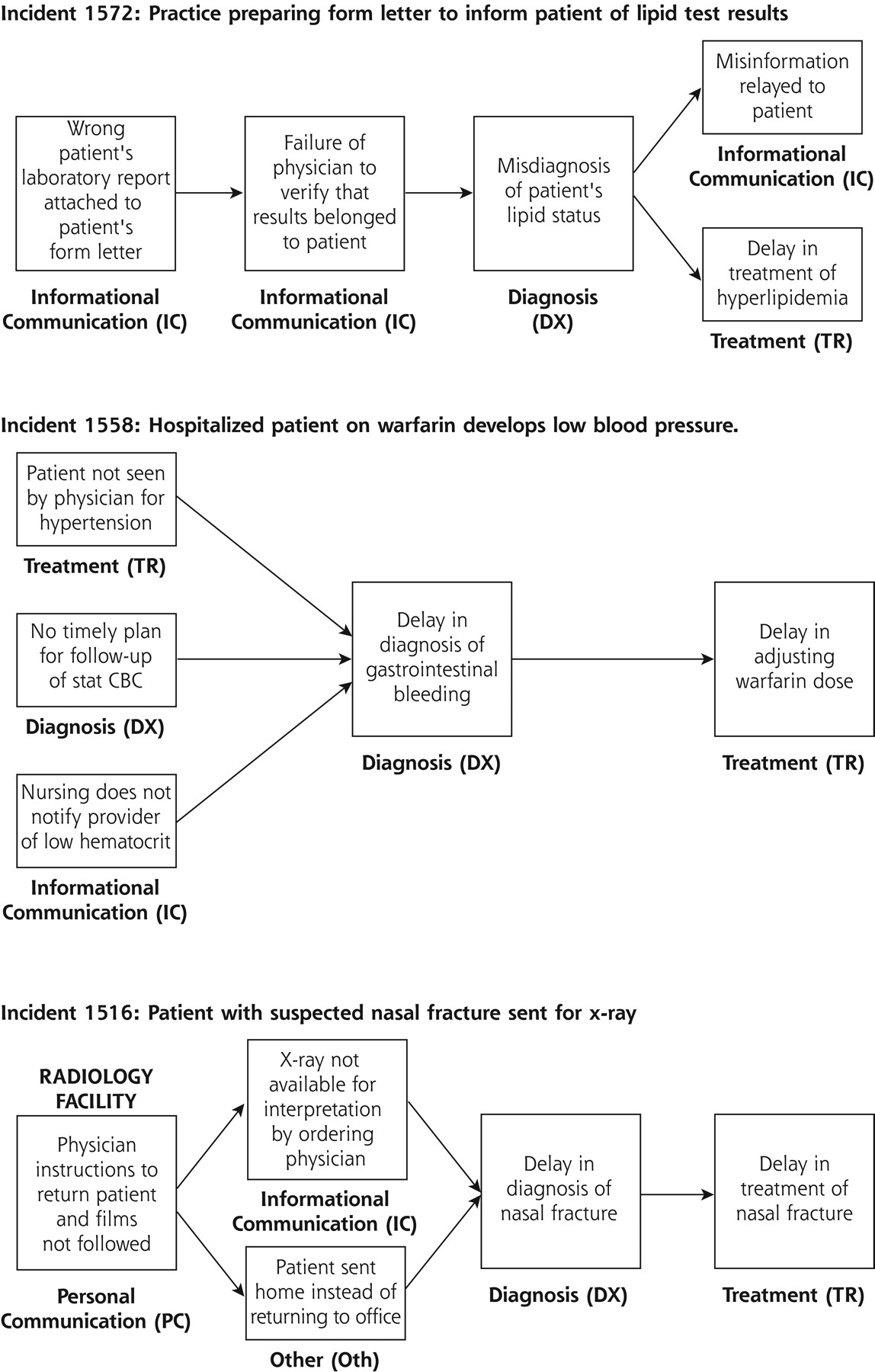
We defined the overall story of what went wrong as an incident, and the individual mistakes within the incident as errors. An incident involving multiple errors was designated a cascade if 1 error led causally to another. We counted an action or omission as an error only if it was inherently wrong independently of what transpired before or after. An error setting off other events that were not themselves errors was considered a single error and not a cascade. We defined distal errors as the final or ultimate error in the cascade, such as not receiving treatment for a disease or not being immunized. The first or underlying errors in the cascades were defined as proximal errors. The chain of errors was arrayed graphically to depict causal relations (Figure 1⇓).
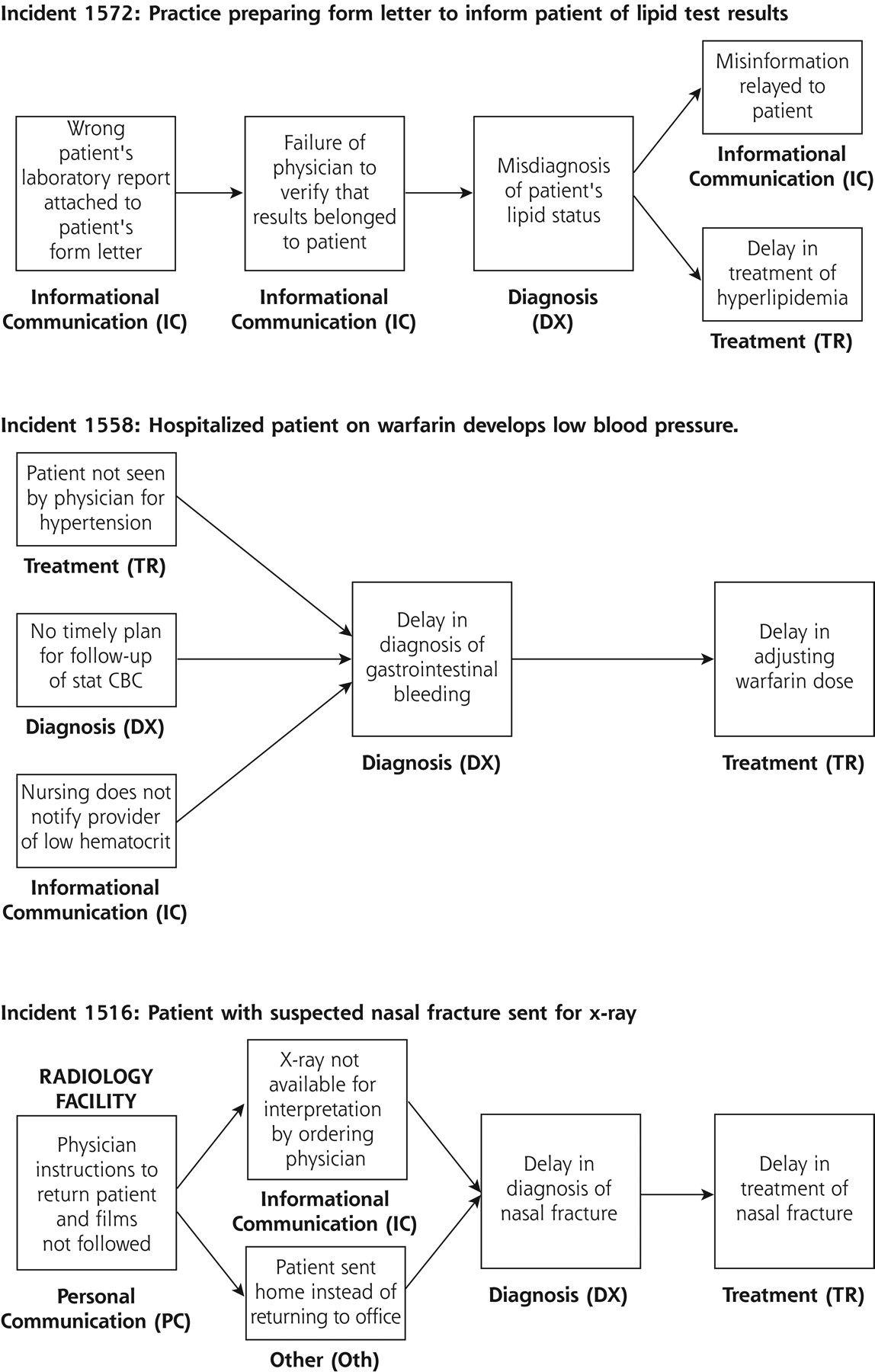
Examples of cascade of errors revealed in physicians’ descriptions of incidents.
Treatment (TR) = errors in administering treatments, medications, immunizations, and care plans; diagnosis (DX) = errors in screening, diagnostic examination and testing, and interpretation of findings; informational communication (IC) = errors in processing messages, instructions, and medical record data; personal communication (PC) = errors in interpersonal communication among providers and patients; CBC = complete blood count.
We listed only errors, not all causal or predisposing factors (eg, being hurried, competing demands) contributing to the incident. Contributing factors were counted as errors only if the group consensus was that the contributing factor represented a wrong act (or omission). For example, a specialist refusing to see an ill patient because he lacked a referral form was coded as an error, but the insurance rules requiring the form (a precondition) was not coded as an error. Errors that may have occurred in the incident but that were not reported by the physician, however likely, were not listed.
Consequences
We defined consequences as the effect of errors on patients. Although errors can affect entities other than patients (eg, providers, health systems, payers), in this analysis we counted only the harms and costs affecting patients. We classified harms into 3 categories: (1) physical injuries (physical health complications from errors during the reporting period), (2) errors that had no reported immediate effect but that heightened the patient’s risk for complications after the reporting period (eg, poor control of hypertension), and (3) psychological or emotional injuries (eg, frustration, anger). We did not count potential harms associated with near misses,22 ie, errors that could but did not have consequences. In considering costs, we noted whether the patient experienced an ordeal (eg, inconvenience of an unnecessary procedure), lost time, out-of-pocket expenditures, or other opportunity costs, but we did not quantify them.
We noted both (1) consequences mentioned in the physicians’ narratives and (2) those inferred by the investigators based on the incident descriptions. For example, the investigators inferred that a laboratory error necessitating a child to undergo repeat venipuncture would cause physical discomfort for the child and frustration and inconvenience for the parents even if these consequences went unmentioned by the physician. These inferred consequences were classified as investigator-observed or investigator-presumed consequences according to whether they were considered self-evident or likely, respectively.
Domains of Patient Care
We classified each of the errors reported in the 75 incidents under 5 domains of patient care: (1) treatment—errors in administering treatments, medications, immunizations, and care plans; (2) diagnosis—errors in screening, diagnostic examination and testing, and interpretation of findings; (3) informational communication—errors in processing messages, instructions, and medical record data; (4) personal communication—errors in interpersonal communication among providers and patients; or (5) other. We envisioned informational communication errors as those that might be remedied by computers or other information technologies. Personal communication errors, such as not fully explaining to patients the rationale for treatment, have more to do with communication styles and skills.
Data Analysis
The authors (SHW, AJK, SMD, RJP), who met in person (July 24, 2002; September 3, 2002; October 22, 2002) and examined shared data files by teleconference and e-mail to review each of the 75 incidents, reached unanimous consensus on (1) how many errors occurred, (2) which story elements were errors, (3) the graphical depiction of causal relationships, (4) which of the 5 domains of care best described each error, (5) which consequences were reported by physicians and which were investigator-observed or presumed (see above), and (6) which category of harms or cost best described each consequence. Each investigator independently coded errors and consequences before the meetings. Discrepancies in coding were discussed as a group, and final codes were selected by unanimous agreement. Each cascade was depicted visually and approved by consensus.
After completing the coding, we gathered descriptive statistics on the distribution of errors across the 5 domains of patient care. (In Appendix 1, Table 2 we contrast these results with those produced by the LINNAEUS taxonomy,20 showing that the most common error depends on the taxonomy and the unit of analysis.) Through cascade analysis, we traced backward to study the types of errors that occurred more proximally and their patterns and sequences in propagating distal errors. Finally, we examined the distribution of consequences reported by physicians and inferred by investigators.
RESULTS
Errors
Table 1⇓ provides descriptive statistics for the 75 reported error incidents. Of the 88 sites implicated in the narratives, 21% were hospitals, 69% were physicians’ offices, and 10% were elsewhere (eg, pharmacies, laboratories, patients’ homes).
Characteristics of Error Reports (N = 75)
Cascade Analysis
The 75 narratives described 184 component errors. Seventeen (23%) of the incidents involved a single error (no cascade), but the remaining 58 narratives described a chain of at least 2 (33, 44%), 3 (17, 23%), or 4 (8, 11%) errors (see examples in Figure 1⇑). The 75 incidents involved 83 proximal errors and 84 distal errors (some incidents involved dual or triple proximal or distal errors). Of the 84 distal errors, 57 (68%) were treatment errors, 13 (15%) were errors in diagnosis, and 14 (17%) were errors in communication. More details about the diagnostic and treatment errors are in Appendix 1, Table 3.
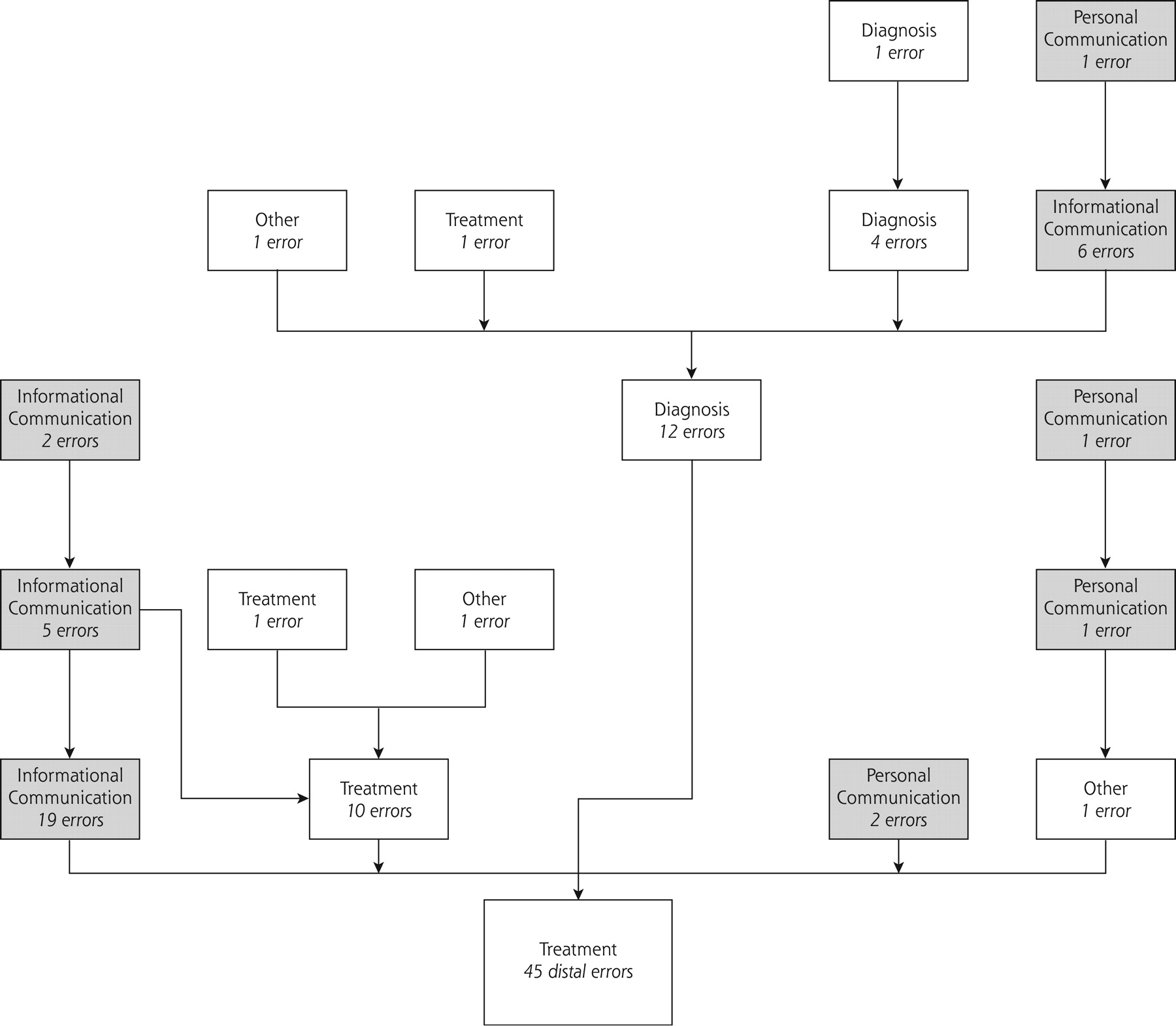
We set aside the 17 incidents that did not involve multiple errors (single-error incidents), leaving 58 cascades for analysis. We then examined the proximal errors that precipitated the cascades. For the 45 distal errors that involved treatment (Figure 2⇓), 10 (22%) were preceded by other errors in treatment, ie, 1 mistake in treatment giving rise to another. In 12 cases treatment errors were preceded by diagnostic errors, and in 5 of these cases 2 or more diagnostic errors precipitated the treatment error.
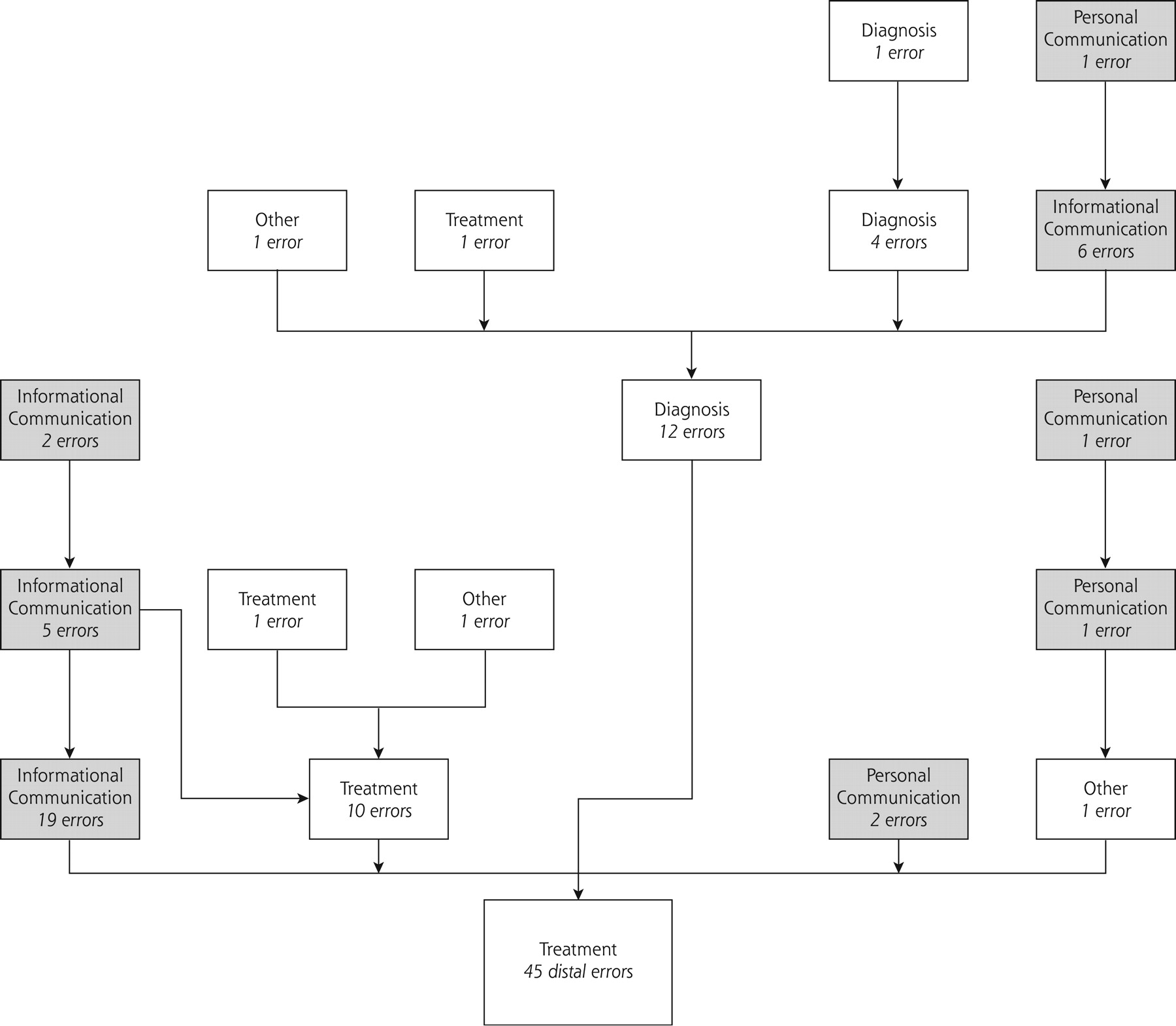
Errors precipitating the 45 distal errors in treatment described in the narratives.
Note: Errors in communication (shaded) predominate throughout the causal chain.
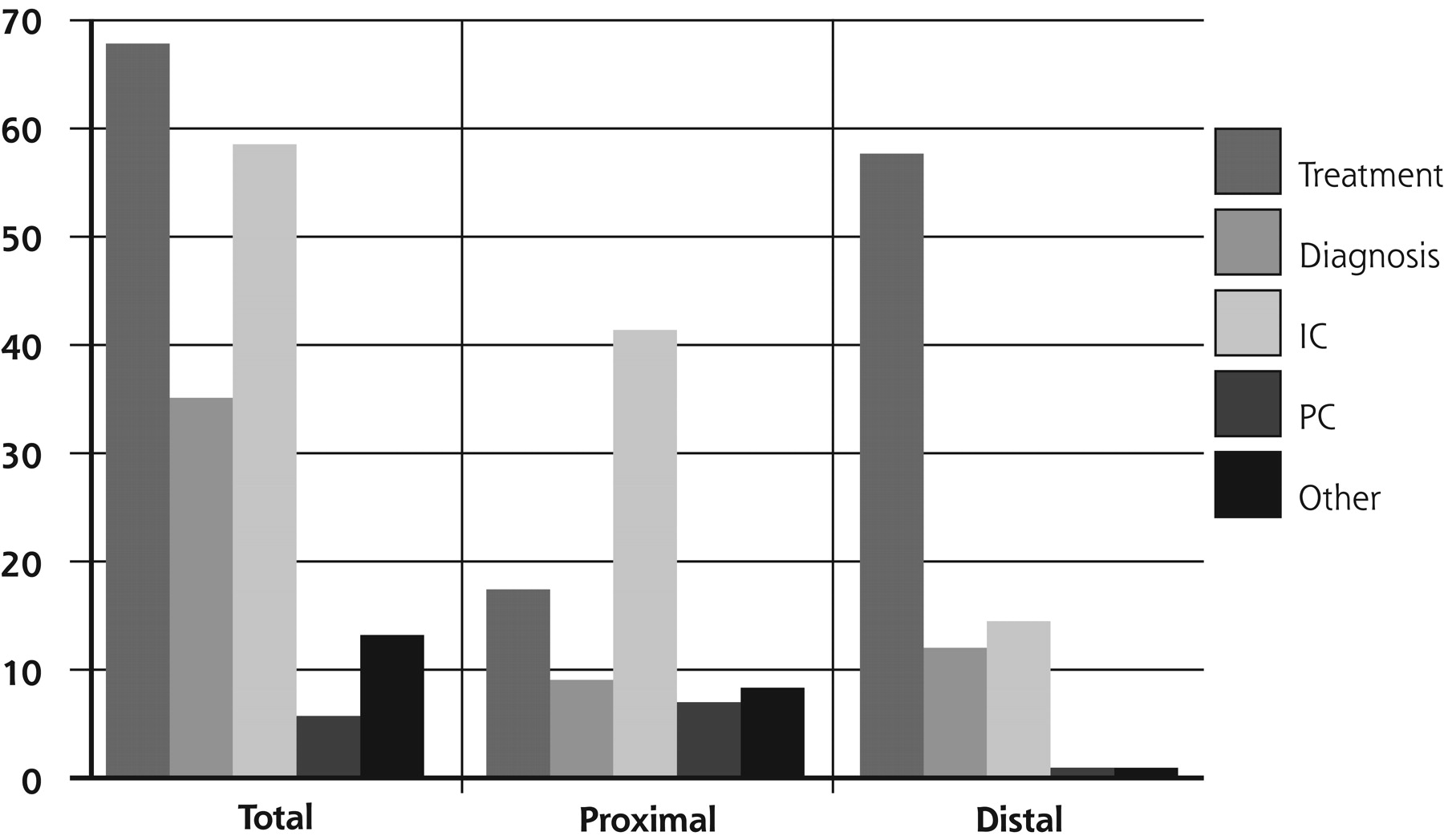
The most conspicuous finding, however, was the frequency with which distal errors were precipitated by errors in communication. Although mistakes in treatment and diagnosis accounted for 83% of distal errors, 80% of proximal errors consisted of mistakes in communication (Figure 3⇓). Fully 67% of distal treatment errors originated from errors in communication. A similar pattern was seen among the 11 incidents with a distal diagnostic error. Often, multiple errors in communication propagated or converged with each other in precipitating the distal diagnostic or treatment error. Altogether, errors in communication set off 47 (63%) of the 75 incidents reported by the physicians.
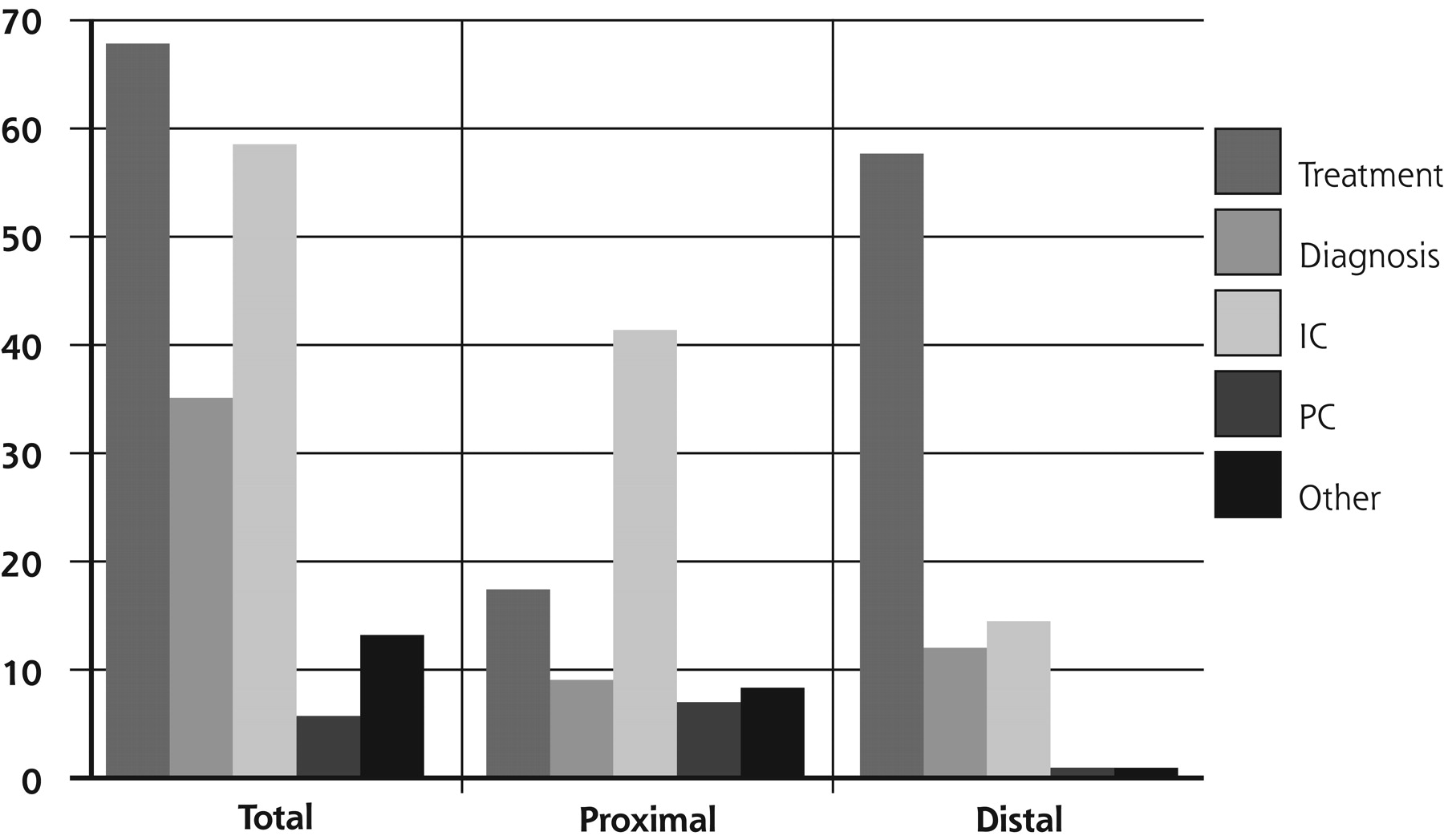
Distribution across 5 domains of care for all errors (N = 184) reported in 75 incidents and for proximal (first or underlying) and distal (final or ultimate) errors at either end of the cascades (N = 83 and 84, respectively).
Note: Distal errors predominantly involve treatment, but communication errors predominate at the outset. Treatment = errors in administering treatments, medications, immunizations, and care plans; diagnosis = errors in screening, diagnostic examination and testing, and interpretation of findings; informational communication (IC) = errors in processing messages, instructions, and medical record data; personal communication (PC) = errors in interpersonal communication among providers and patients.
Of the 64 errors in communication reported by physicians (Appendix 1, Table 4), 57 (90%) constituted informational miscommunication that is potentially preventable through the use of computers or other information systems. These errors included breakdowns in communication among colleagues and with patients that are potentially avoidable through electronic communication and other strategies (44%); misinformation in the medical record that might be prevented by automated data entry (21%); breakdowns in processing patient requests and messages that are amenable to electronic message-handling procedures (18%); inaccessible medical records that are avoidable with electronic medical records (12%); and the absence of reminder systems (5%).
Not all errors could be traced to errors in communication. Nine incidents began with mistakes in diagnosis, and 18 began with treatment errors (Appendix 1, Table 5). Although these errors in clinical judgment and therapy might also have originated from errors in communication or other factors not reflective of judgment, evidence to this effect was absent in the physicians’ narratives.
Consequences to Patients
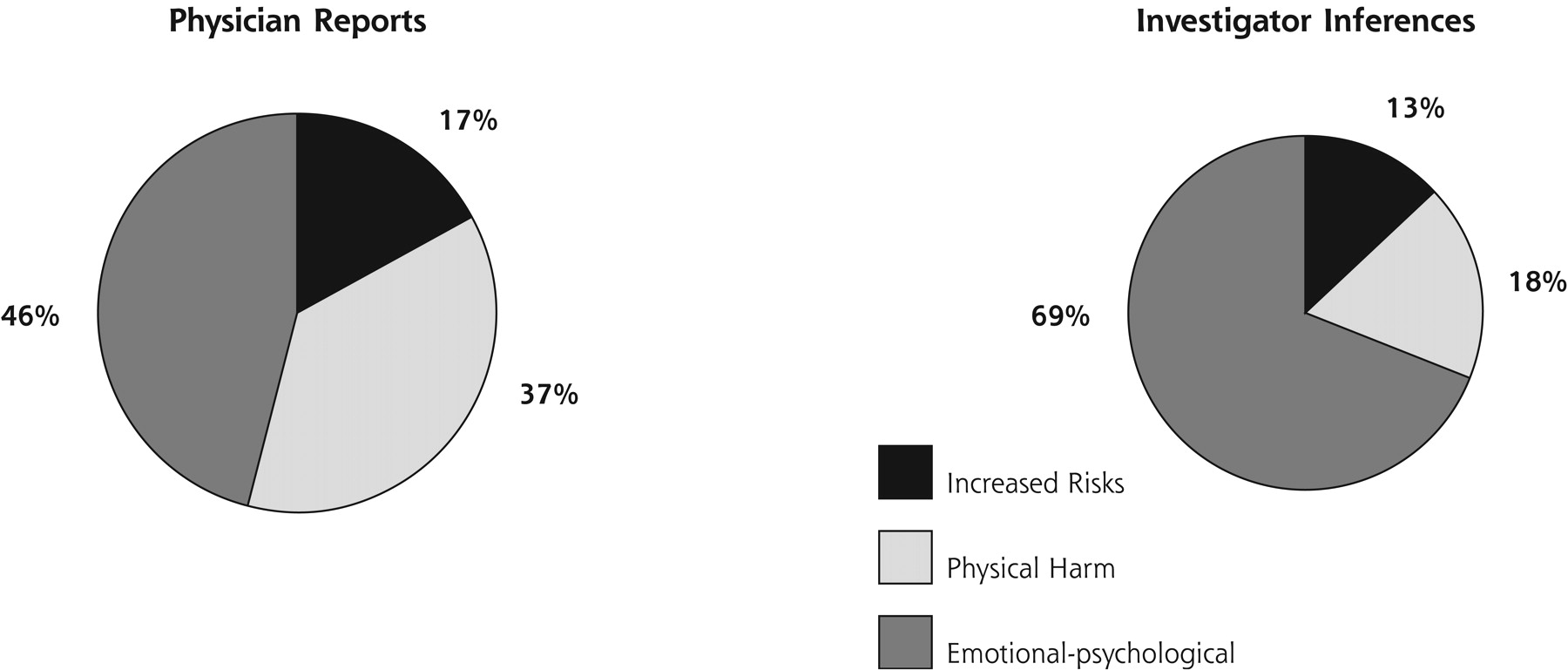
The physicians described 35 (32 observed, 3 presumed) health consequences in 30 narratives. When asked directly whether the patient was harmed, however, the physicians answered affirmatively in only 13 (43%) cases. Investigator analysis of the physician reports identified 67 additional ways in which patients’ health was necessarily (9) or likely (58) affected but went unmentioned by the physicians, and 30 incidents where opportunity costs were likely. Psychological and emotional effects accounted for only 17% (6/35) of the health consequences reported by physicians but 69% (46/67) of the health consequences inferred by investigators (Figure 4⇓). Details about the consequences reported by physicians and inferred by investigators are in the Appendix 1, Table 6.
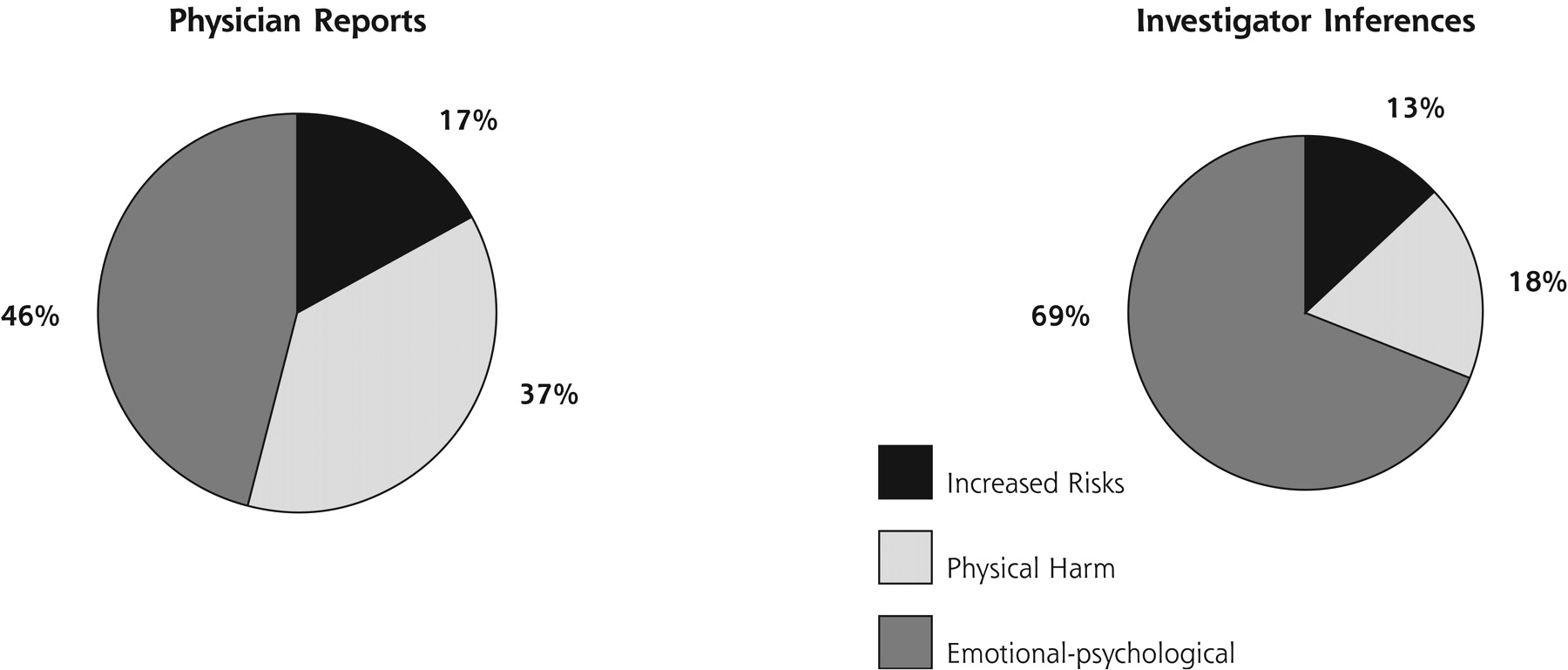
Consequences to patients as reported by physicians and inferred by investigators.
Note: Physicians were more likely to report physical harms and less likely to report emotional or psychological effects.
DISCUSSION
The patient safety movement currently focuses on errors for which there are available solutions,23, 24 such as automated prescription entry,25, 26 and on other errors that are assumed to be most common or harmful. There is, however, limited epidemiologic research with which to determine the latter. High-quality, generalizable data are lacking,27 and the definition of error itself is argued.28, 29
Most efforts to quantify errors focus on downstream events, predominantly errors in diagnosis and treatment. Such mistakes, viewed in isolation from their causal origins, appear as clinical misjudgments30, 31 and inspire interventions designed around skill building,32, 33 yet the underlying issue may not be misjudgment but the quality of the data on which the judgments are based. The policy importance of overlooking proximal causes is great, because physicians, health care systems, and policy makers, operating from inadequate evidence and the misperceptions it creates may be inattentive to the errors and system defects that threaten patients the most.34– 36
We found cascade analysis useful in identifying upstream errors that are qualitatively different from distal errors and that imply different solutions. Fully 77% of the stories in our study involved a chain of individual errors. Recognizing and documenting these causal chains serves several purposes. First, it enhances the quality of error epidemiology by making errors, and not incidents, the unit of analysis. Error epidemiology is skewed by counting an incident once and giving it one name, such as adverse drug event, when it is causally linked to other errors, such as a misdiagnosis or a lost telephone message.
Second, cascade analysis reveals the story line of errors. Summary statistics that tabulate the raw totals of errors within cascades (eg, Appendix 1, Table 2) do not clarify temporal or causal interrelationships, nor do they distinguish the distal errors from those that play a more causal role. In clarifying what really happened, cascade analysis redirects attention (and blame) from the actors involved in the distal error to the circumstances causing proximal events. Although we found that 92% of the distal errors involved mistakes in diagnosis and treatment, we found that two thirds (67%) of these errors were set in motion by errors in communication. In many incidents the most seasoned clinician would repeat the same mistake if given the same, flawed facts.
Third, by identifying underlying upstream causes, cascade analysis suggests solutions to both the index problem and the other errors they propagate. For example, more than 90% of the errors in communication appeared to be remediable by computers or other information systems. Cascade analysis helps to direct energies and resources toward root causes, but it goes beyond traditional root cause analysis37 to identify intermediary errors in the causal chain. Midstream problems that predominate in medical errors and are more amenable to correction than root causes28, 38 can be identified through cascade analysis.
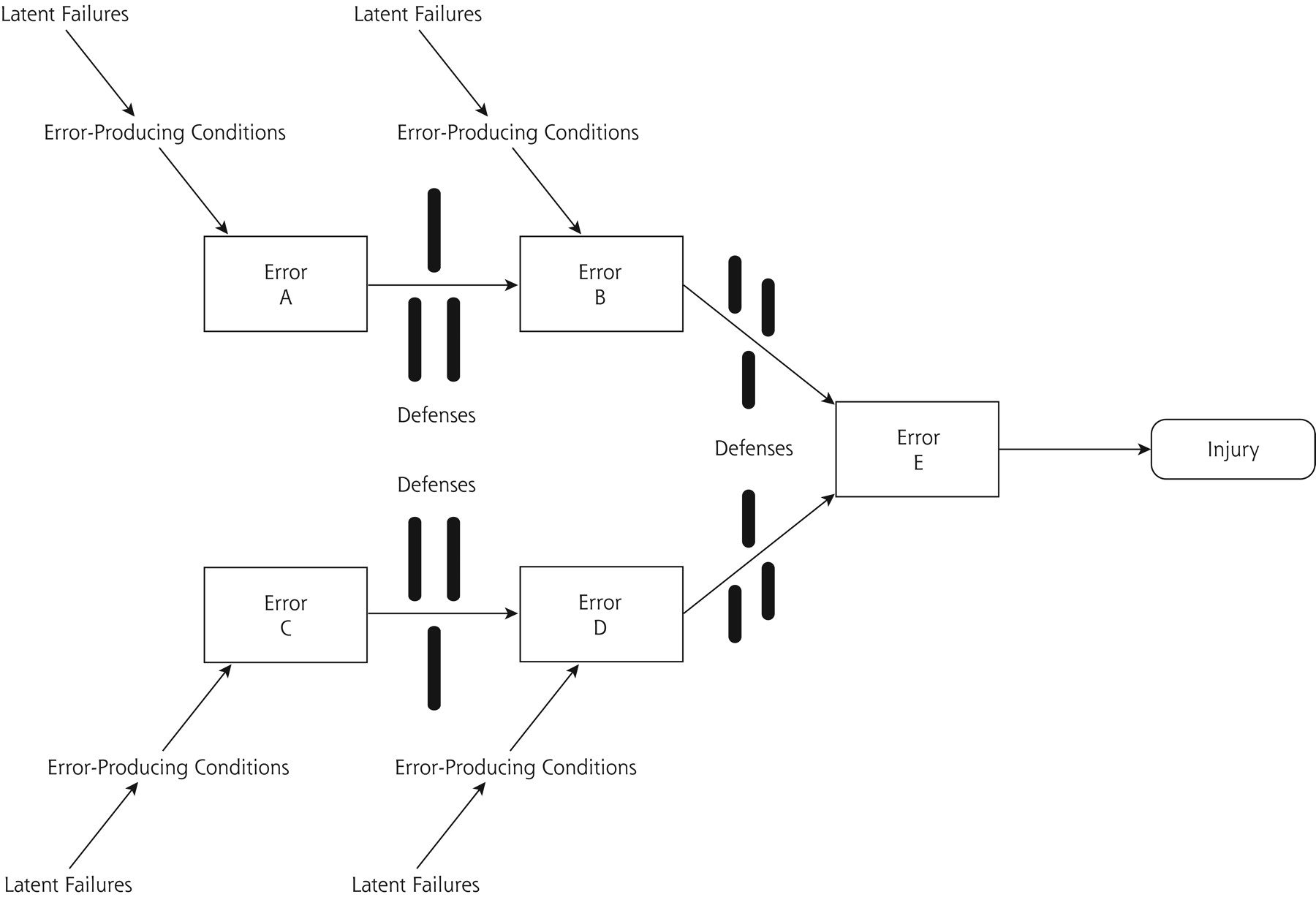
The role of root cause (or systems) analysis in understanding medical errors is not new.39 Reason’s classic model of organizational accidents40 (depicted in Appendix 1, Figure 1⇑) recognized that errors (“unsafe acts”) are “active failures” that arise from error-producing environmental conditions and that these conditions arise from flawed organizational systems (“latent failures”). Vincent and colleagues41– 43 expanded Reason’s model for application in medicine and introduced a detailed protocol44, 45 for tracking the causes of clinical incidents. A similar approach was embraced recently by the Institute of Medicine, which advocated such analyses in standardized error reports.46
The models published by Reason and Vincent et al placed all errors (unsafe acts) in 1 box (Appendix 1 Figure 1⇑), but they understood that in many incidents the box represents a chain of errors, what Dovey et al2 described as a toxic cascade. Each of these errors can be accompanied by the cadre of precipitants that Reason and Vincent described: latent failures, contributory factors, and absent defenses. Others are currently examining the role of contributing factors in propagating error incidents.47 Merging their work with our notion of cascades suggests a more complex and dynamic causal model for medical errors (Figure 5⇓).
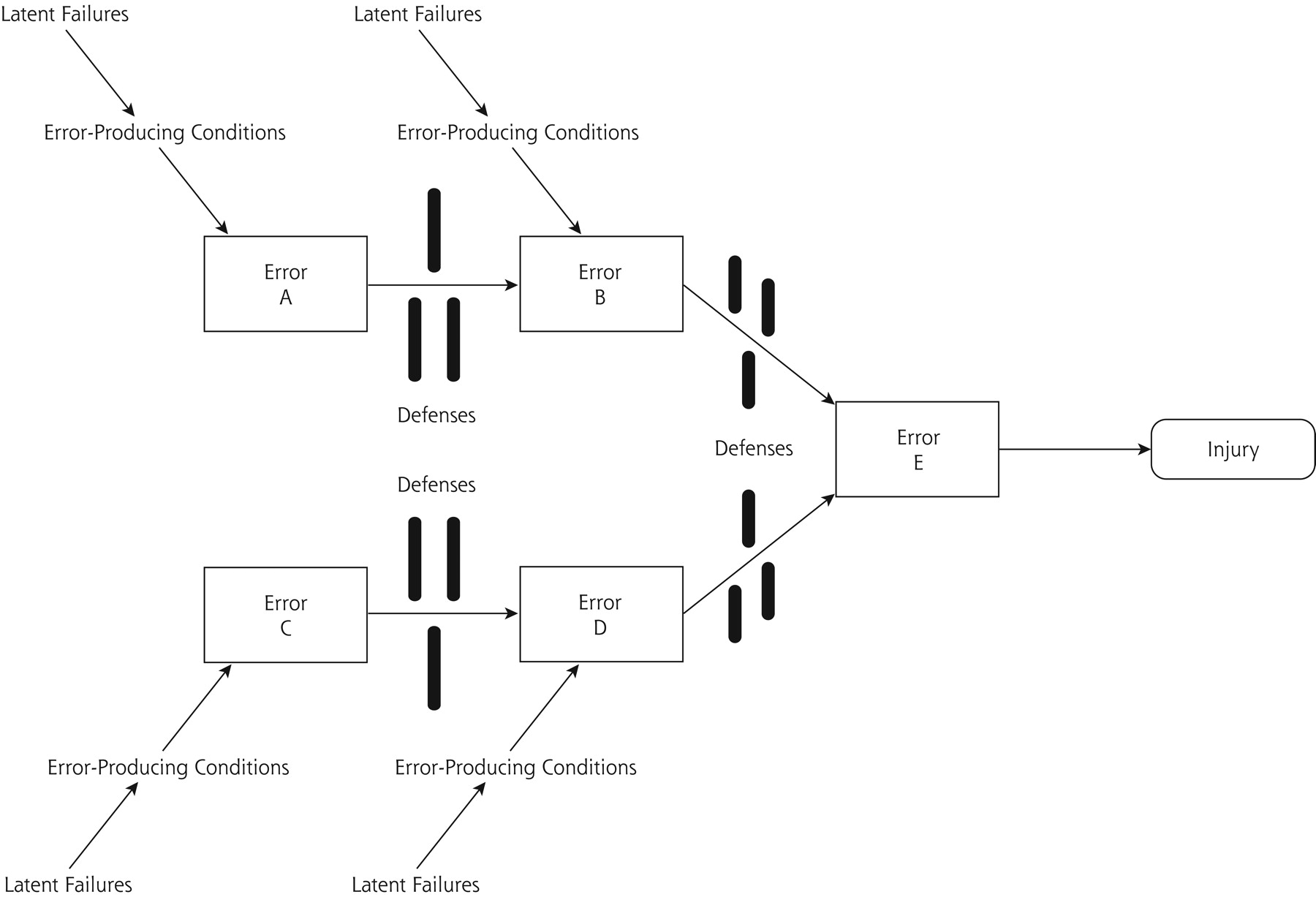
Analytic construct to incorporate Reason’s model of organizational accidents into the notion of cascades.
Note: The construct recognizes that each error in the cascade can arise from error-producing conditions, which exist because of latent failures, and that the errors occur in the absence of adequate defenses (safeguards). The predisposing factors that contribute to each error are not necessarily distinct, eg, fatigue may cause error A and error B, nor does injury only occur as a result of distal errors.
We found physicians’ reporting to be more useful in describing incidents than in documenting consequences to patients. Physicians appeared reluctant to acknowledge that patients were harmed, even when the harm was mentioned in their narratives. It is unclear whether this represents medicolegal sensitivities or a subtle psychological manifestation of denial. We found that physicians’ awareness of consequences focused more on immediate physical consequences and less on psychological and emotional trauma and costs.
This study has several limitations: (1) We doubt that the physician reports were complete, accurate, free of bias, or representative of all errors in primary care. The physicians might not have reported all relevant details or might have suggested precipitants other than the true causes. We did not seek, however, to achieve representativeness or to attribute blame, but rather to test a principle: to demonstrate the notion of cascades beginning with the elements of stories reported by physicians. The same approach could then be used with more fully documented incidents to map out a more comprehensive causal chain. (2) Our cascade analysis focused on errors that seemed to propagate cascades, omitting errors unknown to the investigators and the other conditions (eg, predisposing factors) that allow errors to occur. We did so consciously for purposes of simplicity but recognize that a complete cascade description would include all elements of the causal chain. (3) Our cascades were constructed empirically from narratives rather than from an independent theoretical construct. (4) We used investigator judgment to infer causal relationships and to assess the likelihood of consequences to patients.
Several research and policy implications emerge from these findings. First, claims about which errors are most common in medicine should be made and interpreted with caution. Second, our experience suggests that epidemiologic studies and policy programs should move away from treating error incidents as single events and should instead use analytic methods, such as cascade analysis, to expose causal relationships and solutions. Third, our findings and those of others48 that diagnostic and treatment errors often begin with errors in communication suggest that safety initiatives should focus less on professional interventions to improve clinical judgment and more on management systems to enhance the quality of information transfer. Fourth, amid doubts that an ideal error-reporting system can be developed, it might be more important to focus on whether the system is designed to relate enough of the story line to facilitate cascade and root cause analysis. Our observation that physicians underreport the impact of errors on patients argues against physician reporting as a reliable data source for harms.
The frequent psychological and emotional consequences observed in our study contrasts with the prevailing perception that errors harm patients primarily through improper drug prescriptions and surgical mishaps.7 In a separate study involving in-depth interviews of primary care patients, we have shown that consumers’ experience of errors is dominated by emotional and psychological trauma more so than physical complications.49
The dissonance between this perception and the medical community’s preoccupation with the (physical) health complications of errors to some extent may reflect the acuity level in hospitals, where experience with errors has been greatest, that is higher than in the ambulatory setting from which our data derive. But the dissonance between physicians and patients that we observed was entirely in the primary care setting, pointing toward a more fundamental difference in perspective. Recent reports50, 51 highlight the discordant perceptions of the public and physicians regarding medical errors. We conclude that no single lens is adequate and that the views through multiple lenses must be blended to gain a full understanding of the frequency and severity with which errors harm patients.
Acknowledgments
The authors wish to thank the 18 family physicians in the United States who anonymously provided the error reports analyzed in this study, and the principal investigators from the 5 other countries that participated in the PCISME study (Aneez Esmail, University of Manchester, United Kingdom; Murray Tilyard and Katherine Hall, University of Otago, New Zealand; Meredith Makeham and Michael Kidd, University of Sydney, Australia; Chris van Weel, University Medical Center, the Netherlands; and Walter Rosser, University of Toronto, Canada). We thank Professor Charles Vincent, University College London, and the anonymous reviewers, for their helpful comments on earlier drafts of this manuscript. We thank Tammy Butler for assistance in managing the project.
Footnotes
Conflict of interest: none reported
Funding support: Supported in part by a grant from the Commonwealth Fund and from grant No. 1R03HS11725-01 from the Agency for Healthcare Research and Quality. Healix software used for physician error reports was provided by World Health Network, London, UK.
- Received for publication September 9, 2003.
- Revision received December 15, 2003.
- Accepted for publication January 5, 2004.
- © 2004 Annals of Family Medicine, Inc.
REFERENCES


Jump to section
Related Articles
Cited By...
- Closing the loop: a process evaluation of inpatient care team communication
- Teams and Teamwork in Cancer Care Delivery: Shared Mental Models to Improve Planning for Discharge and Coordination of Follow-Up Care
- Laboratory testing in general practice: a patient safety blind spot
- Beliefs and experiences can influence patient participation in handover between primary and secondary care--a qualitative study of patient perspectives
- 'Tempos' management in primary care: a key factor for classifying adverse events, and improving quality and safety
- Safety incidents in family medicine
- Lessons learnt from incidents reported by postgraduate trainees in Dutch general practice. A prospective cohort study
- 'Tempos' management in primary care: a key factor for classifying adverse events, and improving quality and safety
- Seeking ethical approval for an international study in primary care patient safety
- Feasibility of centre-based incident reporting in primary healthcare: the SPIEGEL study
- Tracing the foundations of a conceptual framework for a patient safety ontology
- Safety learning system development--incident reporting component for family practice
- Management of Test Results in Family Medicine Offices
- Mitigation of patient harm from testing errors in family medicine offices: a report from the American Academy of Family Physicians National Research Network
- Testing process errors and their harms and consequences reported from family medicine practices: a study of the American Academy of Family Physicians National Research Network
- Causes of preventable drug-related hospital admissions: a qualitative study
- Stopping the error cascade: a report on ameliorators from the ASIPS collaborative
- Errors and adverse events in family medicine: Developing and validating a Canadian taxonomy of errors
- Medication errors in mental healthcare: a systematic review
- How to Use the Annals Online Discussion
- What should we report to medical error reporting systems?
- Why Isn't It Better?
- In This Issue: Practice Change and Patient Safety